
Provider Reel Algorithms Adapting to Swedish App Transaction Patterns for Built-In Play Safeguards
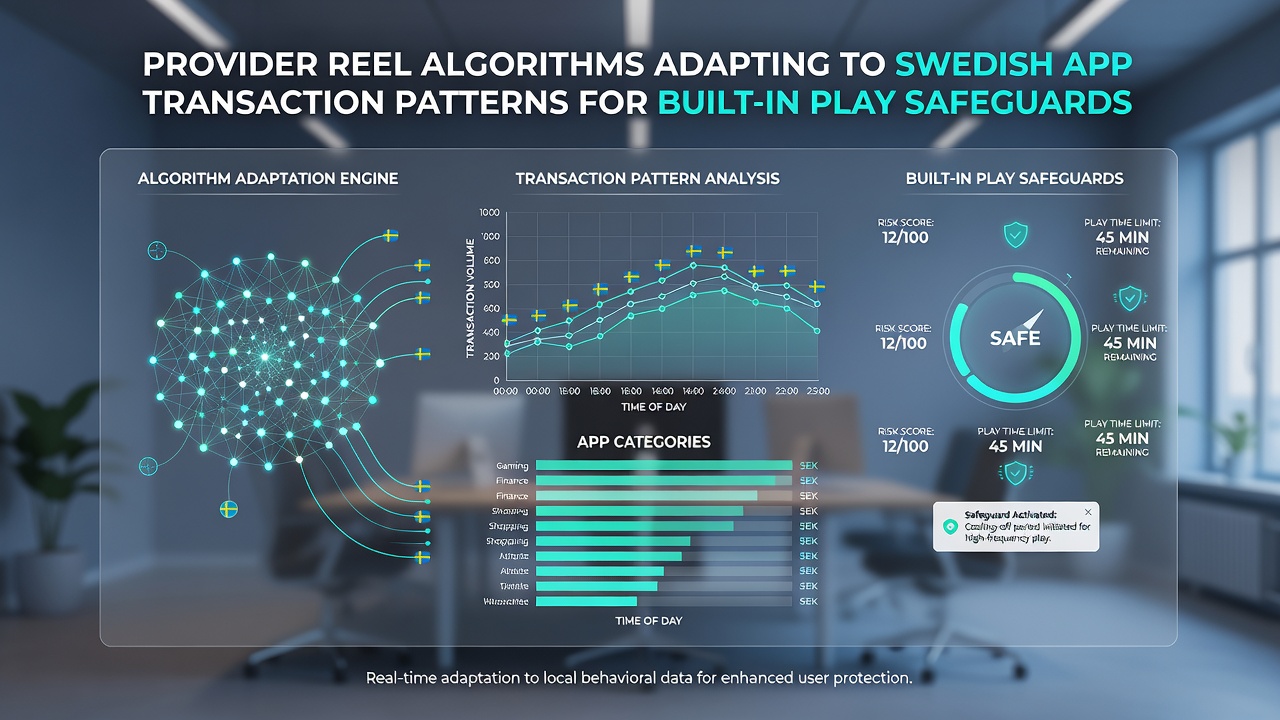
Swedish mobile casino platforms have seen providers adjust reel algorithms to align directly with app transaction data, creating automated safeguards that respond to deposit patterns and spending limits in real time, and this integration has accelerated through late 2026. Developers now track sequences of deposits and withdrawals within the app environment to modify spin frequency, reel velocity, and feature triggers without requiring separate player interventions.
Transaction Data Driving Reel Adjustments
App-based payment flows in Sweden generate detailed logs of transaction timing and amounts, and providers feed these records into backend systems that recalibrate slot mechanics accordingly, so when a user approaches a pre-set daily cap the algorithm extends reel spin durations or inserts mandatory pauses between rounds. Researchers at Nordic gaming technology institutes have documented how these changes occur at the code level, with reel stop positions weighted to reduce rapid successive wins once transaction thresholds near activation.
Payment providers operating under Swedish licensing requirements transmit limit information directly to game servers, and this connection allows reel engines to slow down or accelerate based on cumulative spend rather than fixed timers alone. Observers note that synchronization happens within milliseconds of each confirmed transaction, preventing the kind of uninterrupted play sessions that once bypassed manual safeguards.
Built-In Safeguards in Slot Mechanics
Reel algorithms now embed session alerts and limit responses inside core gameplay loops, so visual and audio cues tied to transaction events appear as part of the slot interface instead of external pop-ups. When an app registers a deposit that brings a player near a weekly cap the reels may introduce longer animation sequences or temporary symbol locks that interrupt momentum while still maintaining the game's mathematical integrity.
Live stream integrations have also adopted similar pacing controls, where reel speeds on broadcast games adjust according to the same transaction data streams used in standalone mobile apps. Experts tracking these developments report that the approach reduces the need for players to switch between payment screens and game windows, since the safeguards operate continuously within the entertainment layer itself.
November 2026 Implementation Updates
By November 2026 multiple providers had rolled out updated reel engines that reference real-time transaction histories from Swish and other approved Swedish payment rails, and these updates introduced dynamic difficulty scaling tied directly to deposit velocity. Data compiled by industry monitoring groups shows measurable reductions in session length once algorithms detect repeated high-frequency transactions within short windows.
Swedish operators have documented cases where reel algorithms automatically lowered maximum bet multipliers after a player exceeded 80 percent of a monthly limit, and the changes occurred without any visible disruption to the underlying random number generation process. Those monitoring compliance confirm that the adjustments satisfy both technical and regulatory standards set by Spelinspektionen while preserving game fairness ratings.
Cross-Platform Synchronization Patterns
Transaction patterns collected across iOS and Android casino apps reveal consistent sequences that providers now use to train predictive models, allowing reel systems to anticipate limit breaches before they occur. A study published through European gaming research networks found that early detection of these patterns enabled algorithms to insert cooling intervals at precise moments, reducing the frequency of manual limit resets requested by players.
Industry reports from the Swedish Gambling Authority indicate that providers must maintain audit trails of every algorithm adjustment triggered by transaction data, and these records undergo quarterly review to verify that built-in safeguards activate correctly across all licensed titles. Additional findings from the OECD regulatory policy division highlight how similar transaction-linked mechanics have begun appearing in other regulated markets that share mobile payment infrastructure characteristics with Sweden.
Conclusion
Reel algorithm adaptations tied to Swedish app transaction patterns continue to evolve as providers refine the timing and intensity of built-in safeguards, and the November 2026 implementations demonstrate how payment data streams now serve as primary inputs for real-time gameplay modulation. Continued monitoring by regulatory bodies and research institutions will determine the long-term effects on player behavior and platform compliance across the Nordic mobile casino sector.